
15 Cardboard Storage Ideas for a Messy Closet

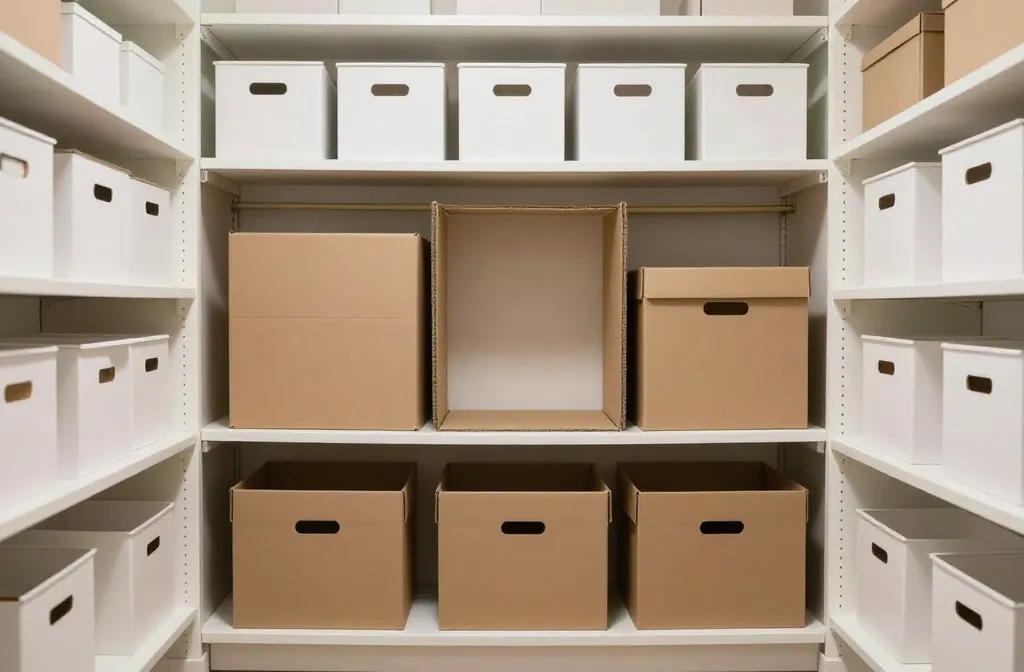
# 15 Cardboard Storage Ideas for a Messy Closet
Closet clutter creeps up fast. Shoes pile at the bottom, accessories tangle in a drawer, and every shelf becomes a catch all for things that don’t have a home. The good news is you probably have the fix sitting in your recycling bin right now.
Cardboard costs nothing, cuts easily, and shapes itself into dividers, bins, and organizers that actually fit your space. These fifteen cardboard storage ideas turn shipping boxes and cereal cartons into closet systems you can build this weekend.
1. Shoe Box Dividers for Dresser Drawers

Socks, belts, and underwear turn into a tangled mess without borders. Shoe boxes cut down to drawer height become instant dividers that keep categories separate.
The make: Measure your drawer depth, mark that height on the box sides, and cut straight across with scissors or a craft knife. Drop the shortened boxes into the drawer to section it off.
Cover the boxes with contact paper or wrapping paper scraps if you want them to look finished. Leave them plain if the drawer stays closed most of the time and you just need the function.
2. Cereal Box Magazine Files

Purses, clutches, and small bags flop over on shelves and end up stacked in a wobbly pile. Magazine files hold them upright so you can see what you own.
- Base: tall cereal boxes, the family size kind
- Cut: slice off the top flaps and cut a diagonal from the front corner to the back top edge
- Finish: wrap in kraft paper, fabric scraps, or leftover wallpaper
- Label: write the bag type on the front corner with a marker
Storage tip: Line them up on a closet shelf with the open side facing out so you can grab a bag without pulling down the whole row.
3. Hanging Shelf Dividers From Pizza Boxes
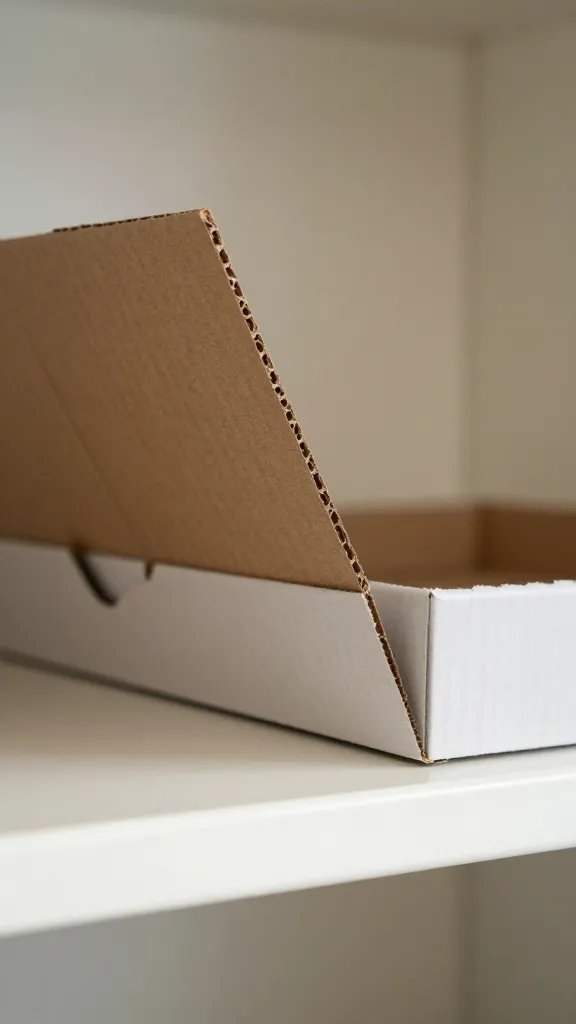
Sweaters and folded jeans slide into each other on shelves and turn neat stacks into leaning towers. Vertical dividers keep each pile in its lane.
Pizza boxes are sturdy, wide, and flat. Cut one in half so you have two rectangles. Stand each piece on its long edge at the back of the shelf and lean your folded stacks against them. The cardboard acts like a bookend but takes up less room.
Budget swap: Shipping box panels work the same way if you don’t order pizza often enough to collect empties.
4. Cardboard Tube Scarf Organizer
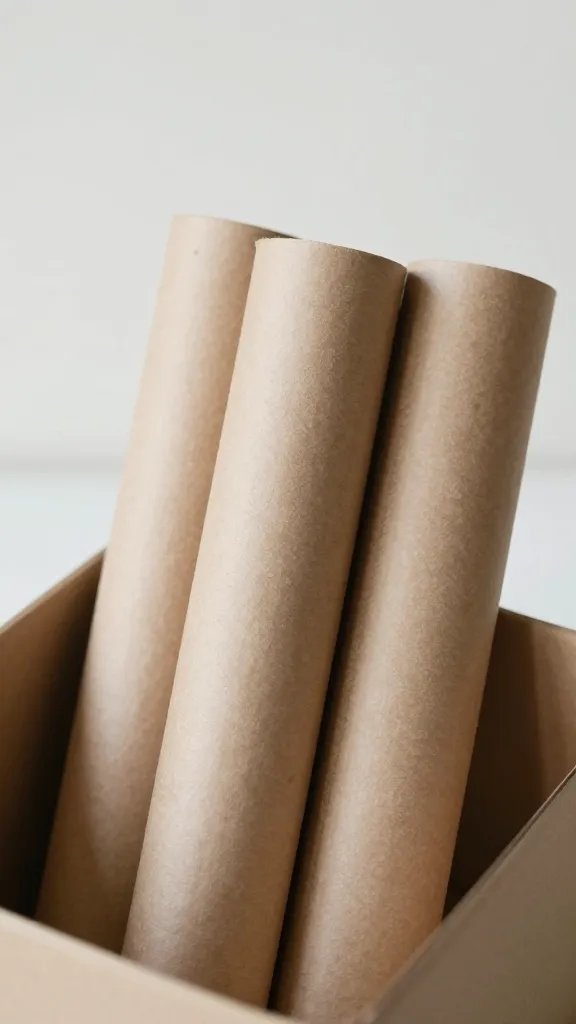
Scarves knot together in a drawer and come out wrinkled. Rolling them and storing them upright solves both problems at once.
Best for: anyone with more than five scarves and a drawer that fits a shoe box.
Collect paper towel tubes or cut wrapping paper tubes into six inch lengths. Stand the tubes inside a shallow box, pack them close so they don’t tip, and roll one scarf into each tube. You can see every pattern when you open the drawer, and nothing gets crushed.
Swap in toilet paper tubes for thin silk scarves or bandanas.
5. Stackable Bins From Shipping Boxes
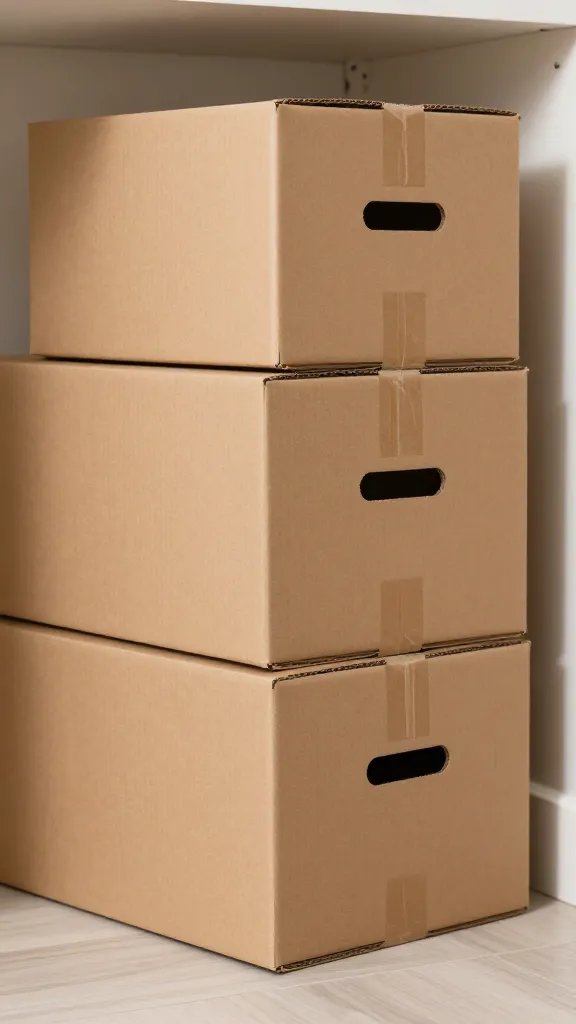
Closet floor space disappears under loose shoes, bags, and random stuff that migrates in from other rooms. Stackable bins corral the chaos and double your floor storage without a trip to the store.
Why it works:
- Shipping boxes already have lids or flaps you can tuck closed, so dust stays out
- Cutting handholds into the sides makes them easy to pull off a stack
- Labeling the ends tells you what’s inside without opening every box
Keep boxes under twelve inches tall so the stack doesn’t get wobbly.
6. Narrow Drawer Organizer for Jewelry
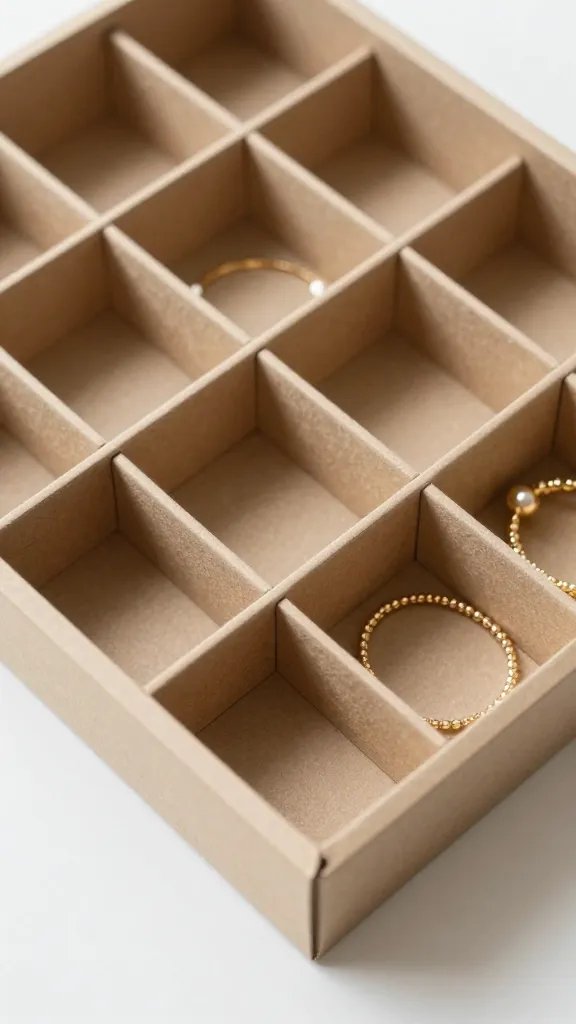
Earrings, rings, and bracelets end up in one small dish that becomes a treasure hunt every morning. A cardboard grid gives each type its own compartment.
Cut cardboard strips the length and width of your drawer. Notch halfway down the center of each strip, then slide the strips together at the notches to form a grid. Drop it into the drawer and assign one square to earrings, one to rings, one to bracelets.
Time needed: about fifteen minutes once you get the measurements right.
Cleanup tip: line each compartment with felt scraps so metal jewelry doesn’t scratch.
7. Tall Boot Shapers
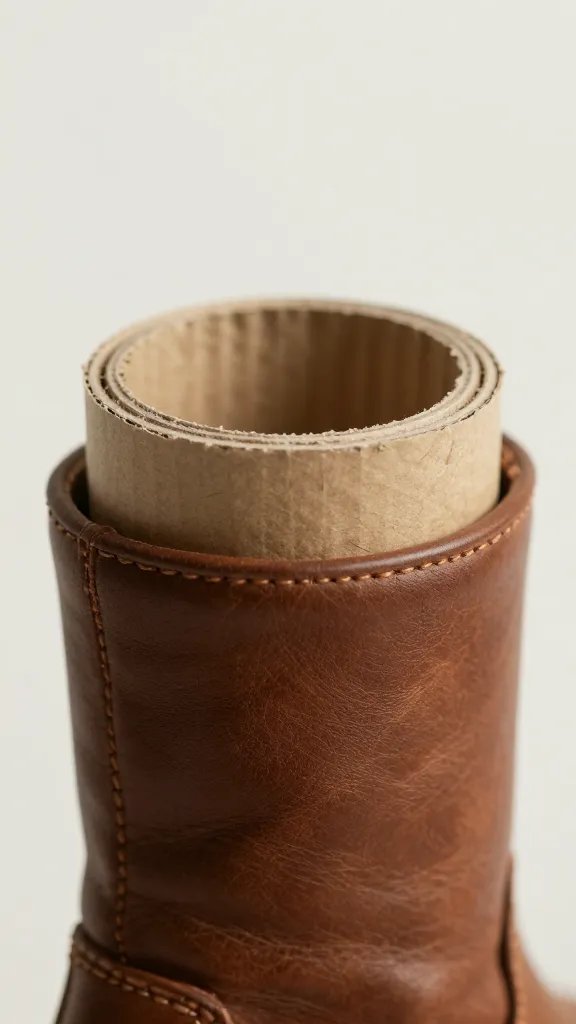
Boots slump over and crease at the ankle when they sit on a shelf too long. Cardboard tubes inside the shaft keep them standing upright and looking new.
The make: roll a piece of sturdy cardboard into a tube slightly shorter than your boot height, tape the seam, and slide one into each boot.
Wrapping paper tubes work if you have knee high boots. Cereal boxes rolled lengthwise fit ankle boots. The cardboard doesn’t need to be pretty because it stays hidden inside, but it does need to be firm enough to hold its shape under the weight of the leather or suede.
8. Cardboard Cubby Insert for Wire Shelving

Wire closet shelves let small things fall through the gaps or tip over between the wires. A flat cardboard base turns the shelf into a stable surface.
Measure the shelf, cut a piece of cardboard to fit, and lay it flat across the wires. Now you can stack folded clothes, line up shoes, or set down accessories without anything wobbling or slipping through.
Why it looks store bought:
- Cover the cardboard with adhesive shelf liner in a solid color
- Trim it so the edges sit just inside the shelf frame
- Nobody sees the wire underneath, just a clean flat surface
Change it out when it gets worn.
9. Layered Box Organizer for Handbags

Stacking handbags crushes the ones on the bottom and makes it hard to grab the one you want without pulling down the whole pile.
Best for: purses and totes that hold their shape better when stored flat.
Stack three or four shallow boxes on a closet shelf, each one holding a single bag. Label the box ends so you know which purse is inside. You can slide out one box without disturbing the rest, and the bags stay dust free between uses.
Use what you have: shirt boxes from gifts or online orders work great because they’re already the right size and depth.
10. Cardboard Drawer Extenders

Shallow drawers waste vertical space because there’s room above the contents but no way to use it. A false bottom adds a hidden layer underneath.
Cut cardboard to fit the drawer, prop it up on small blocks made from folded cardboard strips, and store flat items like scarves or tights on the false bottom. Drop lighter items like socks or accessories on top. The drawer now holds twice as much without looking overstuffed.
What to avoid: don’t store anything heavy on the false bottom or it will sag and collapse onto the items below.
11. Custom Closet Shelf Labels

Bins and boxes help organize a closet, but unlabeled containers just move the mess out of sight. You still have to open three boxes to find what you need.
Cut small rectangles from cereal boxes or cracker boxes. The printed side becomes the back, and the plain side faces out. Write the contents with a marker, punch a hole in one corner, and tie each label to a bin handle or box edge with string.
Color note: paint the cardboard tags with leftover craft paint if you want them to match your closet palette.
Reuse it later: untie the labels and swap them out when you reorganize or change what each bin holds.
12. Cardboard Roll Holder for Belts

Belts tangle, buckles scratch each other, and pulling one out of a drawer messes up the rest. Rolling each belt around a cardboard tube keeps them separate and easy to grab.
- Tube: paper towel or wrapping paper tube cut into six inch pieces
- Method: buckle the belt loosely and roll it around the tube
- Storage: stand the tubes upright in a drawer or shallow box
- Bonus: you can see the buckle of each belt without unrolling anything
Thicker belts need wider tubes, so save a few wrapping paper cores if you have statement belts with big hardware.
13. Small Item Catch All Boxes

Sunglasses, hair ties, and pocket stuff that comes out at the end of the day need a landing spot or they scatter across the dresser top.
Cover a cracker box or granola bar box with fabric scraps or contact paper, cut it down to about three inches tall, and set it on a shelf near the closet door. Toss in the small things that used to clutter counters. At the end of the week, sort through the box and put everything back where it belongs.
Mess control: one catch all box is helpful, but more than two just turns into more clutter.
14. Adjustable Closet Rod Dividers
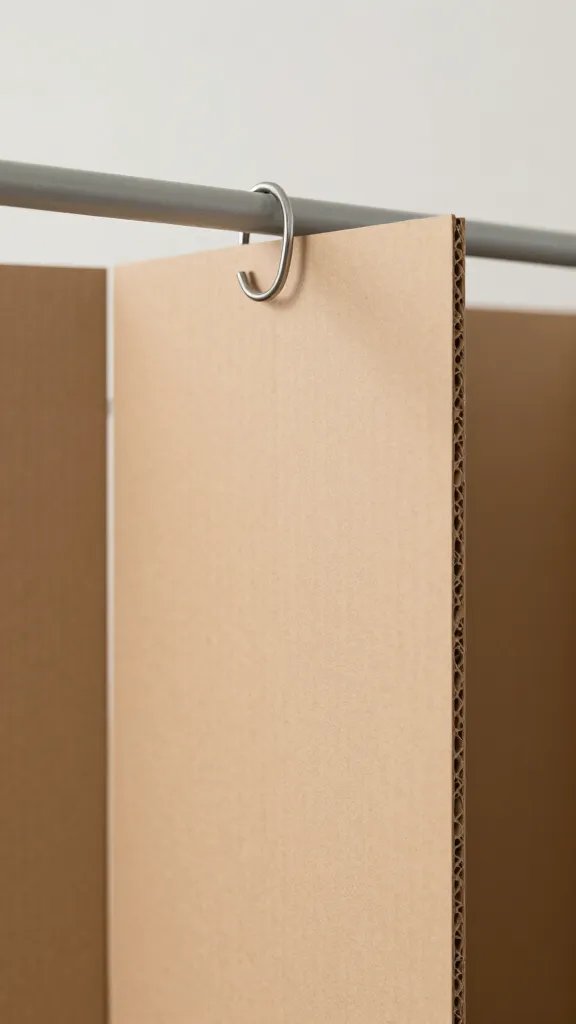
Hanging clothes shift along the rod and bunch up in one section, leaving empty space at the ends. Dividers section off the rod so work clothes stay separate from casual shirts and dresses don’t drift into the jacket zone.
Cut sturdy cardboard into rectangles about four inches wide and six inches tall. Cut a notch at the top center deep enough to hook over the closet rod. Slide the dividers onto the rod between clothing categories and label each section with a marker.
Make it easier: reinforce the notch with a layer of duct tape so the cardboard doesn’t tear when you move it.
15. Cardboard Hat Storage Boxes
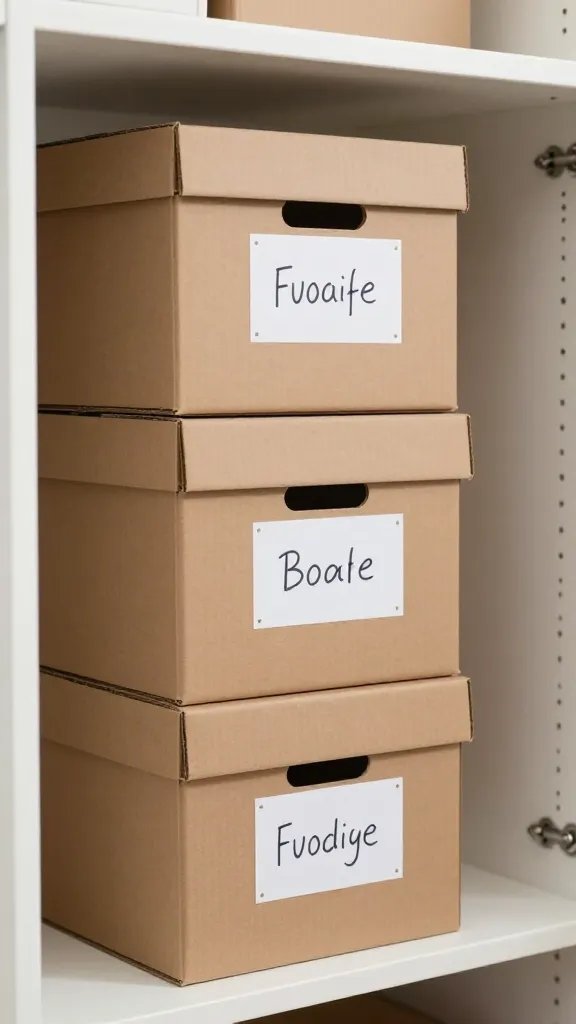
Hats get crushed at the back of a shelf or knocked out of shape when other things pile on top. Individual boxes protect the shape and stack neatly.
Best for: structured hats like fedoras, baseball caps, or sun hats that lose their form under pressure.
Find a box slightly larger than the hat, cut it down so the lid closes without pressing on the crown, and store one hat per box. Stack the boxes on a high shelf where they won’t get bumped. Label the ends so you don’t have to open every box to find the one you want.
Line the inside with tissue paper if the hat has embellishments that might snag on raw cardboard edges.
A messy closet usually means you don’t have enough places to put things, not that you have too much stuff. Cardboard gives you those places without spending money or waiting for a delivery. Most of these organizers take less than an hour to make, and you can adjust the size to fit your exact shelves and drawers. Save this for the next time you open a closet door and something falls on your head.